
During the Qin dynasty many amazing wonders were created here is a brief look into this age.
please note the citations for these pictures are below (at the very bottom)
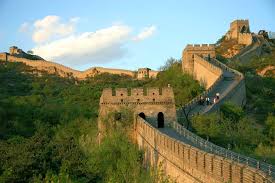
Behold the Great Wall of China. It was constructed to help defend from mongol raids and incursions. Around 1000 A.D this wall prevented Genghis Khan from conquering china. This wall is considered a world wonder and the longest wall in the world. It stretches from Manchuria and ends in eastern china.
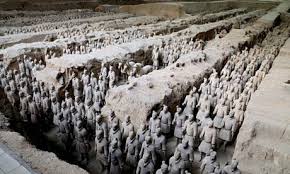
After 49 years of life emperor Qin died. In his memory a massive shrine was created. This burial place also housed the Terracotta army, a massive army of clay figures that would serve him in the after life. In the mid 1900's archaeologists found this monument and learned thousands of secrets.
One of Qin's most ambitious goals was to find the "elixir of life" however he failed and instead poisoned and eventually killed himself. The pills he thought was the elixir (known as mercury pills) were deadly and killed him.

Map of his lands, he controlled more lands than any other ancient empire in China before him.

A statue of emperor Qin. These statues were created to pay respect to the great emperor after his death at age 49. there are still hundreds of these around. Most were made after death but some from his days still remain.

This is a Qin age palace in China, outside of the palace is another statue.

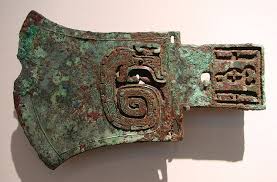
This is a Jade tool from the Qin dynasty. This tools were worth a lot of money and often buried with there owners. jade is a valuable stone similar to quartz but definitely more valuable.
A painting of Emperor Qin, created roughly 500 yrs. after his death.

A carving of emperor Qin created during his life.

Another Jade artifact. It appears to be a coin of some sort. It dates back to roughly 300 B.C, the end of the Qin dynasty.

Weapons of the Qin dynasty were quite common. These bronze arrows are the real deal.

This brick isn't ordinary. On it is 12 characters written in the form of Chinese used during the Qin dynasty. It is about 2200 years old.

The arrows above didn't just fly, they were shot by something like this Qin dynasty crossbow. It has been restored since it discovery.

The soldiers of the Qin dynasty used a flask, like the one shown, to store/drink water.

http://www.bing.com/images/search?q=photos+of+qin+era&FORM=HDRSC2
https://www.google.com/search?q=qin+dynasty+images&source=lnms&tbm=isch&sa=X&ei=bOF9UaveJcSW0QGks4HwAw&ved=0CAcQ_AUoAQ&biw=1600&bih=749#tbm=isch&sa=1&q=qin+dynasty+images+terracotta+army&oq=qin+dynasty+images+terracotta+army&gs_l=img.3...43624.47388.0.47851.16.16.0.0.0.0.136.802.12j2.14.0...0.0...1c.1.11.img.nnCaGvFl3RE&bav=on.2,or.r_cp.r_qf.&bvm=bv.45645796,d.dmQ&fp=d0215550623832ef&biw=1600&bih=749
https://www.google.com/search?q=qin+dynasty+images&source=lnms&tbm=isch&sa=X&ei=bOF9UaveJcSW0QGks4HwAw&ved=0CAcQ_AUoAQ&biw=1600&bih=749
please note the citations for these pictures are below (at the very bottom)
Behold the Great Wall of China. It was constructed to help defend from mongol raids and incursions. Around 1000 A.D this wall prevented Genghis Khan from conquering china. This wall is considered a world wonder and the longest wall in the world. It stretches from Manchuria and ends in eastern china.
After 49 years of life emperor Qin died. In his memory a massive shrine was created. This burial place also housed the Terracotta army, a massive army of clay figures that would serve him in the after life. In the mid 1900's archaeologists found this monument and learned thousands of secrets.
One of Qin's most ambitious goals was to find the "elixir of life" however he failed and instead poisoned and eventually killed himself. The pills he thought was the elixir (known as mercury pills) were deadly and killed him.
Map of his lands, he controlled more lands than any other ancient empire in China before him.
A statue of emperor Qin. These statues were created to pay respect to the great emperor after his death at age 49. there are still hundreds of these around. Most were made after death but some from his days still remain.
This is a Qin age palace in China, outside of the palace is another statue.
This is a Jade tool from the Qin dynasty. This tools were worth a lot of money and often buried with there owners. jade is a valuable stone similar to quartz but definitely more valuable.
A painting of Emperor Qin, created roughly 500 yrs. after his death.
A carving of emperor Qin created during his life.
Another Jade artifact. It appears to be a coin of some sort. It dates back to roughly 300 B.C, the end of the Qin dynasty.
Weapons of the Qin dynasty were quite common. These bronze arrows are the real deal.
This brick isn't ordinary. On it is 12 characters written in the form of Chinese used during the Qin dynasty. It is about 2200 years old.
The arrows above didn't just fly, they were shot by something like this Qin dynasty crossbow. It has been restored since it discovery.
The soldiers of the Qin dynasty used a flask, like the one shown, to store/drink water.
http://www.bing.com/images/search?q=photos+of+qin+era&FORM=HDRSC2
https://www.google.com/search?q=qin+dynasty+images&source=lnms&tbm=isch&sa=X&ei=bOF9UaveJcSW0QGks4HwAw&ved=0CAcQ_AUoAQ&biw=1600&bih=749#tbm=isch&sa=1&q=qin+dynasty+images+terracotta+army&oq=qin+dynasty+images+terracotta+army&gs_l=img.3...43624.47388.0.47851.16.16.0.0.0.0.136.802.12j2.14.0...0.0...1c.1.11.img.nnCaGvFl3RE&bav=on.2,or.r_cp.r_qf.&bvm=bv.45645796,d.dmQ&fp=d0215550623832ef&biw=1600&bih=749
https://www.google.com/search?q=qin+dynasty+images&source=lnms&tbm=isch&sa=X&ei=bOF9UaveJcSW0QGks4HwAw&ved=0CAcQ_AUoAQ&biw=1600&bih=749

No comments:
Post a Comment